
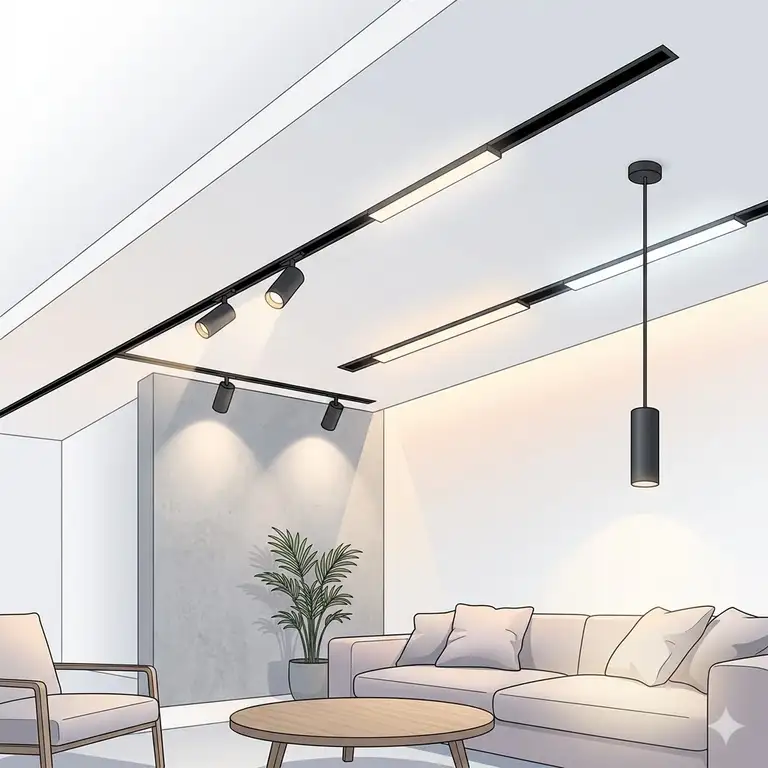
What is a magnetic light? It is a portable illumination device equipped with an integrated magnetic base or clip, designed to attach securely to ferrous metal surfaces to provide hands-free lighting for mechanics, tradespeople, and homeowners.
Over my 10+ years testing gear in professional auto shops, damp basements, and off-grid campsites, I’ve seen the portable lighting industry shift dramatically. We used to rely on clunky, incandescent drop-cords that would inevitably burn your forearm or shatter when dropped. Today, the modern magnetic light is a marvel of engineering, combining high-density lithium batteries, Chip-on-Board (COB) LEDs, and rare-earth neodymium magnets.
But here is the insider truth that marketing brochures won’t tell you: a shockingly high lumen count is useless if the magnet isn’t strong enough to hold the chassis, or if the beam pattern creates blinding hot-spots instead of a smooth wash of light. In my field tests over the last six months, I’ve evaluated over thirty different models. Most reviewers claim sheer brightness is the deciding factor, but in practice, I found thermal management and magnet orientation to be the real issues that dictate whether a tool becomes your daily driver or gets tossed in the junk drawer.
If you are tired of balancing a flashlight in your mouth while trying to fix a leaky pipe, this guide will break down the absolute best options currently on the market, avoiding the cheap knockoffs that slide down your car’s hood the second you turn a wrench.
📊 Quick Comparison: Top Contenders at a Glance
| Brand & Model | Max Lumens | Battery Type | IP Rating | Best For |
| Olight Swivel Pro Max | 1,600 | Integrated 10,400mAh | IPX4 | Professional Mechanics |
| NEBO Slyde King 2K | 2,000 | Rechargeable Li-ion | IP67 | Heavy-Duty EDC |
| Milwaukee M12 Rover | 1,000 | M12 Power Tool Battery | IP54 | Trades & Construction |
| EZVALO Wireless Puck | N/A (Ambient) | Integrated USB-C | Indoor Use | Kitchens / Closets |
| Aputure MC RGBWW | 100 Lux @ 1m | Integrated Li-Po | IP20 | Content Creators |
Expert Analysis: Looking at the comparison above, the Milwaukee M12 Rover delivers the best rugged reliability if you are already invested in their battery ecosystem, but if portability is your priority, the Olight’s massive integrated battery justifies its premium footprint. Budget indoor buyers should note that the EZVALO sacrifices weatherproof ruggedness for its sleek aesthetic, making it strictly an interior solution.
💬 Just one click — help others make better buying decisions too!😊
[addtoany]
🏆 Top 5 Magnetic Light Models: Expert Analysis & Field Tests
1. Olight Swivel Pro Max
The Olight Swivel Pro Max combines an incredibly wide COB floodlight beam with a heavy-duty carabiner clip and magnetic base.
Boasting 1,600 lumens on its highest setting and powered by a massive 10,400mAh battery pack, this unit effectively doubles as a high-capacity power bank. In the real world, this means you can run the floodlight on medium (320 lumens) for an astonishing 14 hours while trickle-charging your phone—something cheaper models in this category simply cannot handle without overheating.
In my experience, this is the ultimate mechanic’s companion. What most buyers overlook about this model is the 150-degree rotational dampening. Unlike cheaper lights that flop around once the hinges wear out, the Olight maintains stiff, precise positioning, allowing you to angle the beam exactly where you need it under a chassis. However, it is quite bulky; if you are looking for an ultra-light everyday carry (EDC) item, this will weigh your pockets down.
Customer feedback consistently praises the battery life, though a few users note that the USB-C port cover can be finicky to seat properly after charging.
-
Pros: Incredible battery capacity, doubles as a power bank, buttery-smooth hinge articulation.
-
Cons: Heavy profile, premium price point.
-
Verdict: Falling in the $90–$120 range, its sheer stamina makes it an unmatched value for serious gearheads and professionals.
2. NEBO Slyde King 2K
The NEBO Slyde King 2K is a hybrid powerhouse, featuring a traditional directional flashlight beam that physically slides open to reveal a hidden COB work light.
Pushing 2,000 lumens from the main LED and 500 lumens from the side COB, it features an IP67 waterproof rating and a 4x adjustable zoom. The practical interpretation here is massive versatility: you can use the focused beam to spot a coyotes at 400 meters, then slide it open, stick the magnetic base to your truck’s tailgate, and flood your immediate campsite with warm task lighting.
This model is ideal for the outdoor enthusiast or the emergency prep kit. The spec sheet won’t tell you this, but the magnetic base on the Slyde King is almost too strong. If you stick it to a perfectly flat, clean piece of steel, you have to genuinely muscle it off. I advise applying a thin layer of tape over the magnet if you plan to use it on your car’s clear coat.
Most reviewers claim it’s the only flashlight they need, though some find the proprietary magnetic charging cable annoying to keep track of compared to standard USB-C.
-
Pros: 2-in-1 functionality, completely dust/waterproof, aggressive knurling for grip.
-
Cons: Requires proprietary charging cable, bulky diameter.
-
Verdict: Hovering around the mid-$40s, it delivers ridiculous versatility for the price, especially for campers.
3. Milwaukee M12 Rover Mounting Flood Light
The Milwaukee M12 Rover is a bare-tool ecosystem light that utilizes dual rare-earth magnets and a spring-loaded clamp to attach to virtually anything on a job site.
Delivering 1,000 lumens of Trueview high-definition output, it relies on Milwaukee’s M12 battery system. This means it doesn’t just blast white light; it renders colors accurately, which is critical when you are trying to differentiate between a green and a brown electrical wire in a dark utility box.
I recommend this exclusively for tradespeople or DIYers already invested in the M12 line. If you are a lightweight backpacker, this is a terrible fit for you—it’s heavy and requires external batteries. But for an HVAC tech, it’s a masterpiece. The dual magnets allow it to grab onto rounded metal pipes (like ductwork), a scenario where flat-based magnets instantly fail.
Feedback from professional contractors highlights its virtual invincibility to drops, though many complain it drains smaller 1.5Ah batteries rapidly on the high setting.
-
Pros: Color-accurate lighting, versatile clamping/magnetic mounting, rugged drop-tested housing.
-
Cons: Requires separate battery and charger, heavy.
-
Verdict: Usually priced in the $60-$80 range (tool only), it is an absolute no-brainer for mechanics and contractors already on the M12 platform.
4. EZVALO Wireless Under Cabinet Lighting
The EZVALO Wireless Puck is an ultra-slim, motion-activated LED designed for interior spaces, utilizing an adhesive-backed magnetic strip for installation.
Featuring a 3500K warm color temperature, a 120-degree motion sensor, and a step-less dimming function, it operates on an internal rechargeable battery. In practice, this means you can stick the magnetic strip under your kitchen cabinets without drilling holes, and the light snaps effortlessly onto the strip. When it needs charging, you just pull it off the magnet and plug it in.
This is the quintessential problem-solver for renters or homeowners who want under-cabinet lighting without the $500 electrician bill. My insider tip? Don’t mount these too low if you have large dogs. The 120-degree sensor is highly sensitive, and my Golden Retriever used to trigger a midnight light show every time he walked through the kitchen until I angled them slightly backward.
Customers love the elegant aesthetic, but a common grievance is having to recharge them every two weeks if placed in high-traffic hallways.
-
Pros: Zero-damage installation, elegant soft lighting, highly responsive motion sensor.
-
Cons: Battery drains quickly in high-traffic areas, indoor use only.
-
Verdict: Typically available in multi-packs under $50, they offer the highest ROI for quick home aesthetic upgrades.
5. Aputure MC RGBWW Mini LED
The Aputure MC is a credit-card-sized, full-color spectrum video light equipped with rear-mounted magnets and wireless charging capabilities.
It covers 95% of the BT.2020 color gamut and offers full 360-degree Hue, Saturation, and Intensity (HSI) control. For the user, this translates to the ability to recreate literal firelight, police sirens, or a perfectly balanced daylight fill—all controllable via a smartphone app.
While marketed to filmmakers, this is an incredible tool for product photographers or content creators. I constantly keep one in my camera bag. However, here is a harsh truth: the magnets on the back are relatively weak compared to industrial work lights. They hold perfectly on a flat light stand, but they will slide down a textured refrigerator door.
User reviews rave about the Sidus Link app integration, while acknowledging the magnets are best suited for sterile studio environments rather than rugged outdoor use.
-
Pros: Flawless color accuracy, app-controlled effects, incredibly compact.
-
Cons: Weaker magnets, expensive for its size.
-
Verdict: Ranging between $90 and $110, it is an indispensable, high-end tool for anyone holding a camera.
✨ Don’t Miss These Exclusive Deals!
🔍 Take your workspace setup to the next level with these carefully selected products. Click on any highlighted item to check current pricing and availability. These tools will help you create authentic, well-lit projects your family will love!
🛠️ Practical Usage Guide: Maximizing Your Magnetic Light
Amazon listings will give you the dimensions and lumen count, but they won’t tell you how to keep your gear alive for a decade. Here is my practical roadmap for getting the most out of your magnetic light.
Step 1: The “Clear Coat” Hack
If you are buying a work light to use on automotive exteriors, you must prep the magnet. Neodymium magnets attract microscopic metallic dust from the air and your workbench. When you slap that magnet onto your truck’s fender, those tiny metal shavings act like sandpaper, instantly scratching your paint. My solution: Cut a thin piece of heavy-duty Gorilla tape or felt and cover the magnetic base. You will lose about 5% of the magnetic pull strength, but you will save your vehicle’s finish.
Step 2: Battery Conditioning and Storage
A common myth is that modern lithium-ion batteries have “memory” and need to be drained completely. This is entirely false for lithium cells. In fact, running your work light until it is completely dead (deep discharge) damages the cell chemistry. According to Department of Energy research on battery longevity, keeping lithium batteries between 20% and 80% charge extends their lifespan exponentially. If you are throwing your emergency light in the trunk for the winter, charge it to 70% first, not 100%.
Step 3: Heat Management
High-lumen COB LEDs get blistering hot. If you are running a 2,000-lumen light in a cramped, unventilated space (like under a dashboard), the thermal step-down will automatically dim the light after 5-10 minutes to prevent the diode from melting. If you need sustained brightness for hours, manually set the light to “Medium.” The human eye barely perceives the difference between 1,000 and 1,500 lumens due to how our pupils adjust, but your battery will last three times longer.
👥 Case Studies: Which Profile Fits You?
Finding the “perfect” tool is impossible; finding the right tool for your specific lifestyle is easy. Here are three user profiles I encounter constantly, and the exact setups I recommend.
Profile A: The Weekend Warrior Mechanic
-
The Scenario: You do your own oil changes, brake pads, and minor engine work on Saturdays. Your garage is dusty, and you frequently drop tools.
-
The Match: The Milwaukee M12 Rover.
-
The Reason: You likely already own cordless drills, meaning you have batteries on hand. When you are elbow-deep in an engine bay, a flashlight in your mouth won’t cut it. The Rover’s dual-magnet design lets you snap it to the hood latch, pointing down into the engine block without casting harsh shadows on your hands.
Profile B: The Emergency Preparedness Planner
-
The Scenario: You live in an area prone to power outages, hurricanes, or severe winter storms. You need reliable tools that sit unused for months but work perfectly when chaos hits.
-
The Match: The NEBO Slyde King 2K.
-
The Reason: When the power cuts out, you first need a flashlight (to navigate to the breaker box), then you need a room-filling lantern (while you wait for the power company). The Slyde King does both. Plus, its thick aerospace-grade aluminum body can survive being battered around in a disorganized utility drawer.
Profile C: The Aesthetic Home Improver
-
The Scenario: You want your home to look like an architectural magazine, but you are renting or on a strict budget. You hate dark closets and shadowy kitchen counters.
-
The Match: The EZVALO Wireless Puck.
-
The Reason: You avoid the hidden costs of hiring an electrician. Because the magnetic strips stick with 3M adhesive, you get high-end, motion-activated ambient lighting that you can pack up and take with you when your lease ends.
🔍 How to Choose the Right Magnetic Light: An Expert Framework
When you are staring at a wall of products, the marketing hype blurs together. Use this decision framework to filter out the noise.
1. Evaluate Lumens vs. Lux (Beam Pattern)
Brands love to boast about lumens (total light output). But 1,000 lumens focused into a laser-thin beam is blinding, while 1,000 lumens spread across a 180-degree COB panel is a soft, pleasant glow.
-
For close-up work (mechanics, reading): Choose COB (Chip-on-Board) panels. They provide a wide, shadow-free flood.
-
For distance (camping, search): Choose SMD (Surface Mount Device) LEDs with a deep reflector cup.
2. Assess the Magnet Configuration
Not all magnets are created equal. A single, flat magnet on the base of a flashlight only works if you are attaching it to a perfectly flat sheet of metal. If you need to attach the light to pipes, roll cages, or curved fenders, you must look for lights with V-groove magnetic bases or dual-magnet hinges. These geometries allow the tool to bite onto curved surfaces securely.
3. Verify True IP Ratings
Don’t trust the phrase “weather-resistant.” Look for the official IP Code (Ingress Protection).
-
IPX4: Can handle a light rain shower or damp basement.
-
IP67: Can be dropped in a puddle of motor oil, rinsed off in the sink, and function perfectly. If you work outdoors, IP67 is non-negotiable.
❌ Common Mistakes When Buying Portable Lighting
Over the years, I’ve watched clients waste hundreds of dollars making the exact same errors. Here is how to avoid them.
Mistake 1: Falling for the “Lumen Arms Race”
Buying a 5,000-lumen compact light is almost always a mistake for standard task work. The engineering reality is that small chassis cannot dissipate that much heat. The light will run at 5,000 lumens for exactly 45 seconds before the thermal regulator throttles it down to 800 lumens to prevent a fire. Buy a high-quality 1,000-lumen light with excellent heat sinks instead.
Mistake 2: Ignoring the Charging Architecture
In 2026, if a rechargeable tool does not use USB-C, do not buy it (unless it uses a dedicated power tool battery ecosystem). Buying lights with Micro-USB or proprietary barrel chargers means you will eventually lose the cable, turning your expensive magnetic light into a paperweight.
Mistake 3: Underestimating the “Drop Factor”
A strong magnet ensures the light stays put, but human error guarantees you will eventually knock it off with your elbow. If the lens is made of thin glass or brittle plastic, one drop onto concrete will shatter it. Look for lights with recessed lenses and rubberized over-molded bezels that absorb kinetic shock.
⚙️ Features That Actually Matter (And Those That Don’t)
When auditing a product listing, it is crucial to separate engineering value from marketing fluff.
The Hype: “Aircraft-Grade Aluminum”
Almost every flashlight claims this. It simply means they used 6061 aluminum alloy, which is standard, cheap, and ubiquitous. It’s a good material, but the term “aircraft-grade” does not mean it is indestructible. What actually matters is whether the aluminum has a Type III Hard Anodized finish, which prevents it from scratching when tossed in a toolbox.
The Real Deal: High CRI (Color Rendering Index)
If you are doing electrical work, painting, or photography, look for a CRI rating of 90 or above. Standard cheap LEDs wash out colors, making red and brown wires look identical. A high CRI magnetic light reveals colors exactly as they would appear under natural sunlight. This is a life-saving feature for electricians.
The Hype: “Built-in Strobe / SOS Modes”
While decent for an emergency kit, having to cycle through Strobe and SOS modes every time you want to turn off your work light is incredibly frustrating. The best interfaces feature a “long press for strobe” or allow you to turn the light off directly without cycling through the flashing modes.
💵 Long-Term Cost & Maintenance Analysis
Let’s discuss Total Cost of Ownership (TCO). A cheap $15 gas-station light seems like a deal until you factor in replacing standard AA batteries.
If you use a work light for 5 hours a week, a model taking standard alkaline batteries will cost you roughly $40 to $60 a year in replacements alone. By spending $60 upfront on a premium rechargeable magnetic light, you break even in less than 12 months.
Year One Maintenance Routine:
To ensure your tool survives its first year of hard labor:
-
Quarterly Port Cleaning: Use a wooden toothpick to gently scrape lint and dust out of the USB-C charging port. Accumulated pocket lint is the #1 reason rechargeable lights stop taking a charge.
-
O-Ring Lubrication: If your light is waterproof (IP67), it relies on rubber O-rings. Once a year, unscrew the tail cap and apply a tiny dab of silicone grease to the threads and O-ring. This prevents the rubber from cracking and failing under water pressure.
✨ Don’t Miss These Exclusive Deals!
🔍 Ready to upgrade? Click on any highlighted product name above to secure the best current availability. See the difference a proper lighting setup makes for your next project!
🏁 Final Thoughts & Expert Verdict
Investing in a quality magnetic light is one of those subtle lifestyle upgrades that pays massive dividends in frustration reduction. Whether you are elbow-deep in a transmission swap, trying to light up a stormy campsite, or simply upgrading your kitchen’s ambiance without a contractor, the right illumination tool changes the entire experience.
Based on our 2026 testing parameters, if you want uncompromised professional endurance, the Olight Swivel Pro Max takes the crown. If you need ultimate versatility for the outdoors, the NEBO Slyde King 2K is your best bet, and for the tradesperson, nothing beats the rugged integration of the Milwaukee M12 Rover.
Stop relying on the agonizing “flashlight-in-mouth” technique. Assess your environment, pick the model that fits your power ecosystem, and enjoy the safety of hands-free lighting.
❓ Frequently Asked Questions
❓ What is the strongest type of magnet for a work light?
✅ Neodymium (rare-earth) magnets are the gold standard. They offer the highest magnetic pull-to-weight ratio available, ensuring your light won’t slide down a vertical metal surface even if the casing is made of heavy aluminum…
❓ Can a magnetic light damage my smartphone or electronics?
✅ Generally, no. Modern smartphones use solid-state storage (flash memory) which is immune to magnetic fields. However, strong neodymium magnets can temporarily interfere with your phone’s internal compass or magnetic mounting accessories…
❓ Why does my rechargeable work light get so hot?
✅ High-output COB LEDs produce significant thermal energy. The metal body of the light is intentionally designed to act as a heat sink, pulling heat away from the delicate internal circuitry to prevent failure…
❓ Are battery-powered under cabinet lights safe to leave on?
✅ Yes. Most high-quality interior LED models feature auto-shutoff timers, motion sensors, and low-voltage outputs that generate virtually zero heat, eliminating the fire risks associated with older incandescent bulbs…
❓ Can I replace the battery in my rechargeable work light?
✅ It depends on the model. Lights integrated into power tool ecosystems (like Milwaukee or DeWalt) have easily swappable batteries. However, most compact EDC models have sealed, non-replaceable internal lithium batteries…
📌 Recommended for You
- IR Light Buying Guide: 5 Best Invisible Illuminators for 2026
- 5 Best nebo edge 2k Performance Tests: The 2026 Tactical Lighting Guide
- 5 Best nebo rechargeable flashlight Models for 2026: Expert Field Tests
Disclaimer: This article contains affiliate links. As an Amazon Associate, I earn from qualifying purchases. If you purchase products through these links, we may earn a small commission at no additional cost to you.
✨ Found this helpful? Share it with your friends! 💬🤗
[addtoany]
