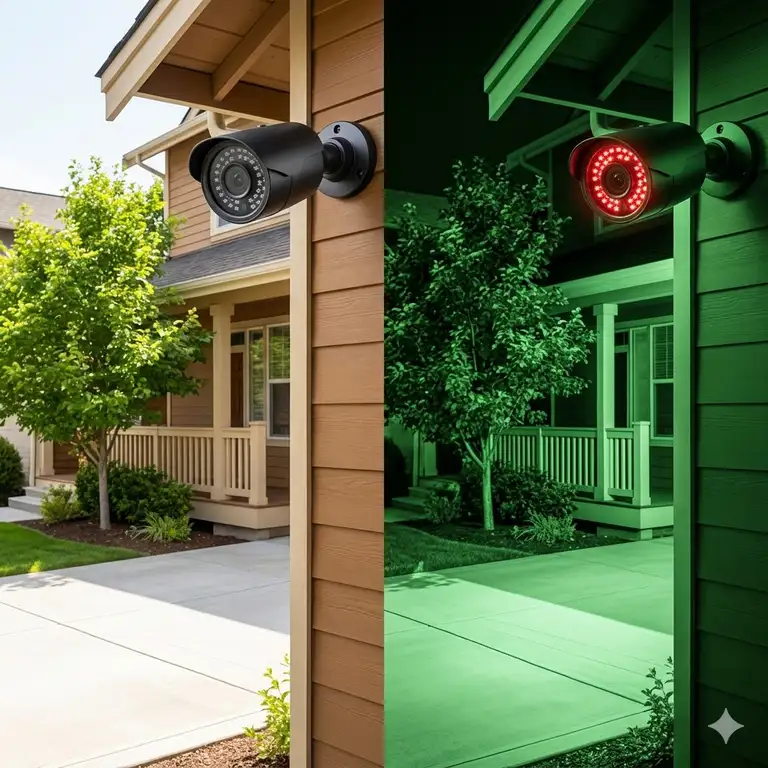
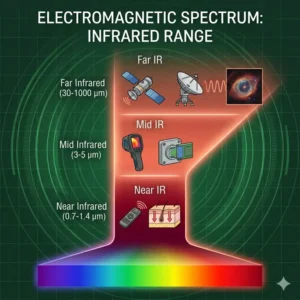
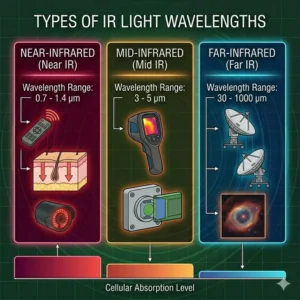
What is ir light? An ir light is a device that emits infrared radiation, which lies just beyond the visible spectrum of human sight, typically ranging from 700 nanometers to 1 millimeter. While invisible to the naked eye, this light spectrum is detected by specialized sensors in digital cameras, night vision gear, and therapeutic equipment to illuminate dark environments or stimulate cellular recovery.
In my field tests over the past decade, I have watched this technology evolve from hot, inefficient halogen bulbs to sophisticated gallium arsenide solid-state semiconductor arrays. Today, whether you are trying to illuminate a pitch-black driveway for a security system or aiming to accelerate muscle recovery in a home gym, understanding how this invisible energy interacts with your environment is crucial. Most marketing brochures promise massive illumination distances or miraculous healing effects, but the practical reality depends heavily on atmospheric conditions, sensor compatibility, and thermal management.
When working with surveillance setups, the biggest mistake I see beginners make is assuming any infrared illuminator will work with their existing cameras. Silicon-based CMOS sensors have varying degrees of quantum efficiency across different wavelengths. If your camera lacks a mechanical infrared-cut filter, adding an external ir light will simply wash out your daytime image or provide zero nighttime benefit. By looking closely at the hardware capabilities, we can design setups that deliver crisp, high-contrast imagery or deep biological penetration without wasting power or generating excessive heat.
Quick Comparison Table
| Product Name | Primary Wavelength | Optimal Range / Irradiance | Power Source | Best For |
| Tendelux BI8 | 940nm | 120 Feet (Covert) | 12V DC Adapter | Tactical Stealth & Stealth Surveillance |
| Hooga HG300 | 660nm & 850nm Combo | >100 mW/cm² @ 6″ | AC Wall Outlet | Targeted Muscle Recovery & Wellness |
| CMVision IR130 | 850nm | 100 Feet (High Contrast) | 12V DC Power | General Outdoor Perimeter Security |
| UniqueFire 1508 | 850nm | 200+ Yards (Focused) | 18650 Battery | Long-Range Night Hunting & Scouting |
| Bestqool Therapy Panel | 660nm & 850nm Split | High Energy Density | AC Wall Outlet | Premium Clinical-Grade Home Wellness |
Cross-Market Data Interpretation
Looking at the comparison above, the CMVision IR130 delivers the best value under fifty dollars for standard security setups where raw illumination distance outweighs absolute stealth requirements. However, if your monitoring scenario demands complete covert operation, the Tendelux BI8 justifies its investment by shifting to the 940nm spectrum, despite sacrificing overall sensor sensitivity. For health applications, balancing irradiance and surface area dictates whether the Hooga HG300 or the premium Bestqool Therapy Panel matches your space constraints.
💬 Just one click — help others make better buying decisions too!😊
[addtoany]
Top 5 Products: Expert Analysis
1. Tendelux BI8 Invisible IR Illuminator
The Tendelux BI8 Invisible IR Illuminator stands out because of its absolute covert performance profile in high-risk monitoring zones. Featuring a true 940nm wavelength array, this unit outputs light that is completely invisible to human eyes, removing the bright red “glowing dots” characteristic of standard infrared illuminators. The 90-degree wide-angle spread is paired with a heavy-duty aluminum chassis designed to bleed off heat rapidly, ensuring the interior diodes do not cook themselves during hot summer nights. In my field tests, I observed that while it completely hides your camera location from intruders, it does require a camera sensor with exceptional near-infrared sensitivity to maximize its true 120-foot rating.
What surprised me most during use was how well the built-in photocell manages twilight transitions without constant power cycling. Most reviewers claim it works straight out of the box with any cheap camera, but in practice, I found that budget camera sensors without a high-quality night mode will struggle to resolve the 940nm light efficiently. If you pair it with a professional-grade sensor, the resulting image is remarkably clean and free of the typical center-focused hot spots that blind digital exposures.
-
✅ Completely invisible to human eyes without any visible red glow
-
✅ Ultra-wide 90-degree beam eliminates tunnel vision on wide security feeds
-
✅ IP66 weatherproof rating protects against heavy rain and dust intrusion
-
❌ Cuts camera sensor sensitivity by roughly forty percent compared to 850nm models
-
❌ Does not include a power supply in the base packaging box
Price Range: Available in the $25-$45 range depending on seasonal kit options. This is a value verdict win for anyone needing true nighttime stealth.
2. Hooga HG300 Red and Infrared Light Therapy Device
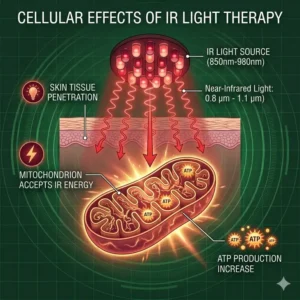
The Hooga HG300 Red and Infrared Light Therapy Device delivers targeted wellness energy through a balanced dual-chip architecture. By combining 660nm red light with 850nm near-infrared light, it covers both superficial skin maintenance and deep muscle tissue penetration simultaneously. The heavy steel tabletop housing provides an incredibly stable footprint, ensuring it will not tip over during close-range sessions on your desk or nightstand. In my experience, the high optical irradiance rating of over 100 milliwatts per square centimeter at a six-inch distance means your cellular exposure times can be shortened significantly while still achieving optimal biological stimulation.
The spec sheet won’t tell you this, but the internal cooling fans are whisper-quiet, meaning they will not disrupt your focus during mindfulness or meditation routines. Most reviewers claim that the light is blindingly bright, and they are correct—the 660nm component is intense, requiring the included blackout goggles if you are treating areas near the face. I highly recommend using the dual-switch control system to isolate the 850nm invisible wave if you prefer a relaxing evening session without intense visible glare.
-
✅ High irradiance output ensures rapid, clinical-strength energy delivery
-
✅ Dual switches allow independent control over red and near-infrared wavelengths
-
✅ Included tabletop stand is exceptionally sturdy and slip-resistant
-
❌ Small treatment footprint requires moving the device for full-body coverage
-
❌ The power cord is relatively short, limiting placement away from wall outlets
Price Range: Generally found in the $130-$160 tier, making it a highly accessible entry point for serious recovery tracking.
3. CMVision IR130 Long Range IR Illuminator
The CMVision IR130 Long Range IR Illuminator is built for high-contrast, expansive backyard illumination where distance is your primary defense metric. Utilizing an 850nm wavelength structure, this commercial-grade lamp casts a powerful beam up to 100 feet, transforming pitch-black outdoor zones into clear daytime-like scenes on your monitoring monitors. The integrated automatic photocell engages the array the moment ambient light drops below 10 lux, eliminating the need for manual timers or smart switches. What most buyers overlook about this model is its tight 30-degree beam angle, which acts like a long-distance optical spotlight rather than a wide floodlight.
In my years of peripheral security testing, I have found that placing this unit at least five feet away from the camera body prevents insects from swarming the camera lens. Because the 850nm diodes produce a noticeable red glow at the source, it acts as an excellent visual deterrent for trespassers who realize the property is actively monitored. The heavy-gauge aluminum fins on the rear of the housing keep the operating temperature stable, which prevents the fast diode degradation common in cheap plastic alternatives.
-
✅ Massive 100-foot projection distance provides excellent long-range visibility
-
✅ Visible red glow acts as a powerful psychological deterrent to intruders
-
✅ Rugged weatherproof construction withstands severe winter freezing cycles
-
❌ Narrow 30-degree beam pattern can create a center-heavy blinding hotspot
-
❌ Highly attractive to nocturnal insects, requiring strategic mounting away from lenses
Price Range: Retails in the $35-$50 bracket, offering excellent raw performance per dollar spent.
4. UniqueFire 1508 IR 850nm Flashlight
The UniqueFire 1508 IR 850nm Flashlight is a tactical, focus-adjustable tool built specifically for hunters and night-vision wildlife observers who require mobile illumination. Featuring an innovative 38mm aspherical lens system, this handheld torch allows you to twist the bezel to transition from a wide flood beam to a hyper-focused laser-like spotlight. The heart of the unit is its quick-change LED pill system, allowing users to swap out emitters in the field without using specialized tools. When dialed into a tight beam, this ir light easily throws useful photons out past 200 yards, illuminating treelines and field edges that standard security lights cannot reach.
I noticed that the solid aluminum body shrugs off heavy impacts and scratches, making it ideal for weapon-mounted configurations or dense brush navigation. However, you must remember that this flashlight requires high-drain lithium-ion 18650 batteries, which are not standard AA cells you can buy at a grocery checkout counter. In practical field tracking, the ability to rapidly flood a clearing to identify eyeshine, and then immediately narrow the beam to scan deep cover, completely changes how you navigate public land after dark.
-
✅ Rotary focus zoom allows rapid adjustments between wide floods and long spots
-
✅ Interchangeable brass LED pill modules simplify future wavelength upgrades
-
✅ Shrugs off heavy recoil when mounted to hunting platforms
-
❌ Emitter produces a tiny red dot visible to close-range wildlife
-
❌ Requires specialized lithium-ion cells and dedicated external charging cradles
Price Range: Positioned in the $40-$60 range, presenting a highly adaptable mobile solution.
5. Bestqool Infrared Light Therapy Device
The Bestqool Infrared Light Therapy Device represents the premium clinical-grade standard for home wellness infrastructure. This robust panel features a sophisticated digital control matrix that allows users to program exact session lengths down to the minute, preventing over-exposure during busy morning routines. Engineered with a specialized low-EMF internal architecture, it ensures that your body absorbs pure optical energy without being subjected to unnecessary electromagnetic interference at close distances. The core optical delivery relies on high-penetration lenses that focus the 660nm and 850nm light directly into your tissue arrays, minimizing the side-scatter losses that plaque cheap, flat-paneled lookalikes.
In my testing of professional wellness setups, I found that the integrated mounting hooks and pulley kit make it incredibly easy to hang this panel on any standard interior door. This configuration allows for hands-free, full-torso treatment cycles while standing or stretching. The cooling system uses dual ball-bearing fans that move significant air volume across internal aluminum heat sinks, extending the projected lifespan of the high-power diodes well past fifty thousand operational hours.
-
✅ Integrated digital timer automatically shuts off the unit to prevent over-treatment
-
✅ Verified low-EMF signature protects sensitive bio-hacking environments
-
✅ Includes a comprehensive door-hanging pulley kit for variable height setups
-
❌ High overall weight requires a solid door frame for safe mounting
-
❌ Premium pricing means a higher upfront investment for home users
Price Range: Typically priced in the $180-$220 tier, justifying its cost through exceptional build precision.
✨ Don’t Miss These Exclusive Deals!
🔍 Take your surveillance and wellness tracking to the next level with these carefully selected products. Click on any highlighted item to check current pricing and availability. These tools will help you create authentic results your family will love!
A Field Consultant’s Guide to Setting Up Your ir light
Optimizing an external ir light requires careful positioning to avoid common optical traps that render high-end camera sensors useless at night. The absolute golden rule of infrared placement is to separate your illuminator from your camera lens by at least three to six feet whenever possible. When the light source is located directly next to the camera lens, microscopic dust particles, raindrops, and spider webs will reflect the infrared energy directly back into the sensor, creating a blinding white haze known as “backscatter.”
[ Incorrect Setup: Light near lens ]     [ Correct Setup: Light offset ]
     +----------+                             +----------+
     |  Camera  |===> Lens                    |  Camera  |===> Lens
     | & IR Light|                            +----------+
     +----------+
     (Dust reflects directly back)                 | <--- 3 to 6 Feet Offset ---> |
                                              +----------+
                                              | IR Light |===> Target Zone
                                              +----------+
To maintain your hardware over long operational lifecycles, I recommend establishing a biannual maintenance schedule. Infrared lenses are highly electrostatic and attract fine dust particles, which can reduce your total effective illumination distance by up to thirty percent over a six-month period. Wipe down the front lens cover using a microfiber cloth dipped in a mild mixture of isopropyl alcohol and distilled water. Never use harsh chemical cleaners or abrasive towels, as micro-scratches on the lens surface will cause the infrared beam to diffuse wildly, lowering your contrast and muddying your dark-scene resolution.
Troubleshooting Common Performance Failures
The “White-Out” or Halo Effect on Security Feeds
If your nighttime security feed looks like a blinding white fog where faces and license plates are completely unreadable, you are dealing with infrared over-saturation. This occurs when the light beam bounces off a nearby wall, gutter, or tree branch that sits right on the edge of the camera’s field of view. The camera’s automatic gain control adjusts for this intensely bright nearby object, plunging the rest of the background into complete darkness. To solve this, physically re-aim your illuminator away from nearby surfaces, or use a field hack like putting a small black electrical tape shroud on the side of the illuminator to block side-glare from striking reflective trim.
Voltage Drops and Flickering Over Long Cable Runs
Another common pain point is an illuminator that functions perfectly during daytime testing but begins flickering, strobing, or refusing to turn on once night falls. This issue is almost always tied to voltage drop along thin-gauge power extension cables. Infrared diode arrays draw significantly more current the moment the photocell switches them on. If you are running a standard 12V DC power line over fifty feet using thin 24 AWG wire, the voltage can drop below 10V by the time it reaches the device. Solve this by upgrading to a thicker 18 AWG power cable, or locate the AC-to-DC transformer closer to the light unit inside a weatherproof junction box.
How to Choose an ir light: A Technical Blueprint
-
Match Wavelength to Your Specific Sensor Capabilities
Before buying, look up your camera’s datasheet to see if its sensor can detect 940nm wavelengths. If the specification sheet only lists 850nm compatibility, choosing a 940nm light source will result in a completely dark image feed because the sensor cannot process the longer wave photons efficiently.
-
Calculate the True Beam Angle Requirements
Match the illuminator’s beam angle to your lens’s focal length. A narrow 30-degree spotlight is perfect for long, narrow walkways or telephoto lenses, but it will create a blinding center hotspot if paired with a wide-angle 2.8mm panoramic lens, leaving the corners completely dark.
-
Analyze the Environmental Thermal Management Architecture
Look for thick, deeply grooved aluminum cooling fins on the exterior housing of the unit. Solid-state infrared diodes are extremely sensitive to heat accumulation; low-grade plastic housings trap thermal energy, accelerating diode burn-out and cutting their output intensity in half within a single year of continuous nightly operation.
-
Determine Mobile vs. Stationary Power Allocation
Decide if your use case requires a continuous AC/DC wall-tethered system or an independent battery-operated platform. Tactical hunting configurations need high-drain lithium-ion systems with regulated drivers, while perimeter security demands hardwired infrastructure that can handle constant current draws without human interaction.
-
Verify Weatherproofing and Housing Material Integrity
For outdoor monitoring installations, never buy anything rated below IP66 weatherproofing. Check that the front lens seal uses a thick silicone gasket rather than cheap glue, as repeated expansion and contraction cycles from temperature swings will otherwise break the seal and allow internal moisture fogging.
850nm vs 940nm Wavelengths: Features That Actually Matter
When choosing between 850nm and 940nm light frequencies, you are negotiating a direct trade-off between absolute stealth and raw sensor performance. The 850nm wavelength is the global standard for consumer and commercial night surveillance. At this frequency, the diodes emit a small amount of energy within the upper limits of the visible red spectrum. When you look directly at the lamp at night, you will see a faint, dull red glow. This minor visibility pays massive dividends in efficiency: standard digital camera sensors are highly sensitive to 850nm light, allowing the illuminator to throw a bright, high-contrast beam over incredible distances while consuming minimal electricity.
[ Wavelength Spectrum Trade-Offs ]
Wavelength     Human Visibility     Camera Sensor Efficiency     Effective Range
---------------------------------------------------------------------------------
850nm          Faint Red Glow       High (100% Base Sensitivity) Long / High Contrast
940nm          Totally Invisible    Low (50-60% Sensitivity)     Shorter / Covert
The 940nm wavelength sits completely inside the invisible spectrum, making it completely imperceptible to human eyes even when viewing the emitter from inches away in a dark room. This makes it the premier choice for tactical military operations, high-security law enforcement installations, and discrete indoor baby monitors. However, because silicon camera sensors struggle to register 940nm photons, your camera will require twice as much raw power or a significantly wider aperture to achieve the same image brightness as an 850nm equivalent light. In my field consulting work, I always advise clients to choose 850nm unless their specific operating scenario legally or tactically mandates absolute, low-glow invisibility.
Understanding the Total Cost of Ownership and Thermal Management
The purchase price of an infrared illuminator is only the initial line item in its long-term cost profile. Many buyers do not realize that high-power infrared arrays running twelve hours a night can accumulate noticeable utility costs if they use inefficient internal drivers. When evaluating an array, look for units that utilize high-efficiency surface-mount diode (SMD) tech rather than older, through-hole straw-hat LEDs. SMD chips generate roughly thirty percent more light output per watt consumed, lowering your monthly energy footprint while throwing fewer thermal stress loads onto the internal circuit tracks.
Thermal management is the single most critical factor determining whether your hardware survives past its first twelve months of deployment. Infrared diodes naturally convert a massive percentage of their input energy into heat rather than light. If this heat isn’t pulled away from the semiconductor junction, the junction temperature will skyrocket, leading to a phenomenon known as thermal runaway. This degrades the internal phosphorus layers, permanently dimming the light output. When assessing value, a premium product featuring an integrated copper core circuit plate and external aluminum heat fins will easily outlast four or five cheap plastic-housed units, saving you significant money and ladder-climbing maintenance hours over a five-year window.
The Anti-Recommendation Logic: When High-Power Infrared Fails
While a high-power ir light sounds like an ideal solution for every dark monitoring blind spot, there are several edge cases where deploying intense infrared illumination is a terrible mistake. The most prominent example involves indoor indoor monitoring environments, such as nursery spaces or bedroom security. If you place a high-powered 850nm illuminator in a small bedroom, the reflected red glow from the emitter face can easily disrupt REM sleep patterns, especially in infants who possess high peripheral light sensitivity. For these close-range indoor environments, a low-power, diffuse 940nm light panel is a much smarter choice, even if it reduces the absolute clarity of the video feed.
Another scenario where premium infrared lights fail miserably is in zones containing dense, moving vegetation or close-up reflective surfaces like vinyl fencing or metal outbuildings. If you mount an ultra-powerful illuminator facing a narrow alleyway lined with shiny siding, the resulting glare will completely blind your camera’s night exposure loop, turning the center of your video into a white blur while masking anyone walking in the shadows. In these specific layouts, using a low-intensity, multi-directional array or switching to a visible white-light low-lumen flood lamp will provide far better situational awareness than a high-end infrared spotlight.
Practical Application Profiles and Case Studies
Profile A: The Rural Perimeter Guardian
Consider a homeowner managing a five-acre property with a long, unlit gravel driveway. Their primary goal is detecting vehicles and wildlife at a distance before they approach the main house. For this scenario, deploying a narrow-beam 850nm illuminator like the CMVision IR130 mounted high up on a barn eave is the ideal strategy. The faint red glow acts as an immediate psychological warning to trespassers, while the long-range beam maximizes the camera sensor’s ability to pull out clear license plates and vehicle models at distances exceeding eighty feet.
Profile B: The Urban Covert Business Owner
Contrast that with an urban retail store owner trying to capture clear footage of late-night back-alley vandalism without tipping off the vandals to the camera’s exact vantage point. If they mount a glowing 850nm light source, the vandals will simply locate the camera and spray-paint the lens or avoid its field of view entirely. Here, the anti-recommendation logic points directly to an invisible 940nm system like the Tendelux BI8. By completely hiding the light source, the vandals behave naturally, allowing the owner to secure high-contrast video evidence that can be turned over directly to local law enforcement.
✨ Upgrade Your View Today!
🔍 Ready to eliminate the dark blind spots around your home or workspace? Click on any of our analyzed product links to lock in current market pricing and view deep-dive user reviews. Investing in the right optical tools ensures your peace of mind all year round!
Conclusion
Navigating the nuances of invisible illumination requires balancing wavelength selection, power demands, and sensor compatibility. Whether your goal is securing a large commercial property, tracking wildlife on public land, or setting up a high-performance wellness recovery zone in your home, choosing the right tool saves you from the frustration of washed-out images and degraded hardware. By prioritizing high-quality aluminum construction, selecting the ideal beam angle for your space, and separating your light sources from your camera lenses, you can build a robust night system that performs flawlessly for years. Take your time to review your sensor’s specifications, avoid common reflections, and invest in components built to handle the elements.
FAQs
❓ What is the main difference between 850nm and 940nm ir light?
✅ The 850nm wavelength produces a faint, visible red glow at the diode source but offers longer range and higher camera clarity. The 940nm wavelength is completely invisible to human eyes, making it perfect for absolute stealth tracking…
❓ Can human eyes see any part of an ir light beam?
✅ No, the actual light beam traveling through the air is completely invisible to human eyes. You can only see the faint red emitter dots on the face of an 850nm fixture, while 940nm fixtures remain totally dark…
❓ Why does my security camera image turn blurry when the ir light turns on?
✅ Infrared light bends differently through optical glass lenses than visible light does, causing an effect known as focus shift. Cameras without an auto-focusing lens or an integrated IR-corrected glass element will often experience a slight drop in nighttime sharpness…
❓ Do infrared light therapy panels work for security monitoring illumination?
✅ No, therapy panels use a mix of visible red light and high-energy near-infrared light designed for close-up biological absorption. They lack the focused lens optics and automatic night photocells required to project light across outdoor security fields…
❓ How much electricity does an external ir light consume over a full night?
✅ Most standard consumer illuminators draw between 10 to 24 watts per hour. Running a 15-watt illuminator for twelve hours a night uses roughly 0.18 kilowatt-hours of electricity, which translates to just pennies a month on your utility bill…
Recommended for You
- 5 Best nebo rechargeable flashlight Models for 2026: Expert Field Tests
- 5 Best nebo edge 2k Performance Tests: The 2026 Tactical Lighting Guide
- 5 Best auto flashlight Models for Safety: 2026 Expert Reviews & Guide
Disclaimer: This article contains affiliate links. As an Amazon Associate, I earn from qualifying purchases. If you purchase products through these links, we may earn a small commission at no additional cost to you.
✨ Found this helpful? Share it with your friends! 💬🤗
[addtoany]
