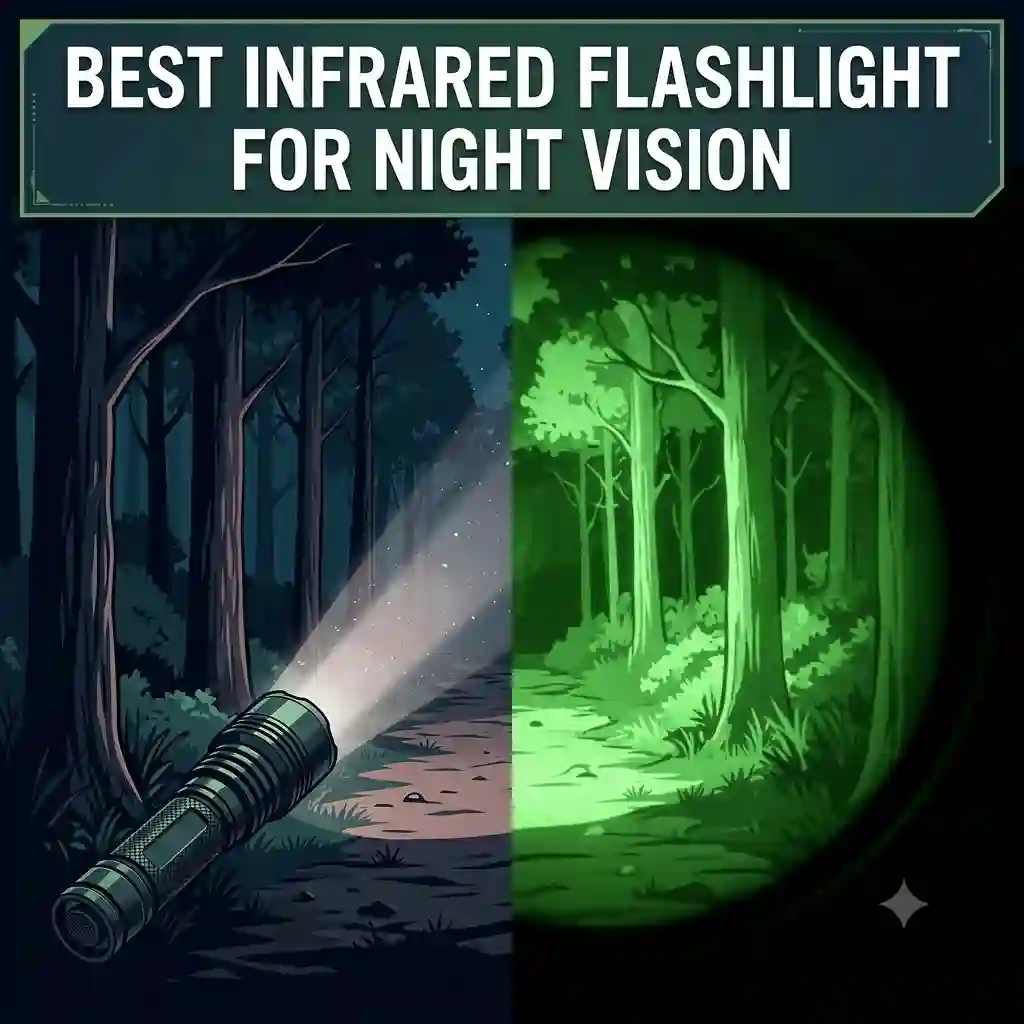
If you have spent any significant amount of time in pitch-black environments—whether hunting coyotes, conducting security patrols, or observing nocturnal wildlife—you already know that even the most expensive night vision goggles (NVGs) or digital scopes have their limits. They rely on ambient light. When there is no moon and heavy cloud cover, your high-tech optic becomes a grainy, useless screen. That is precisely where a high-quality infrared flashlight becomes your most critical piece of gear.
What is an infrared flashlight?
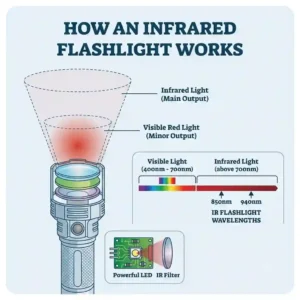
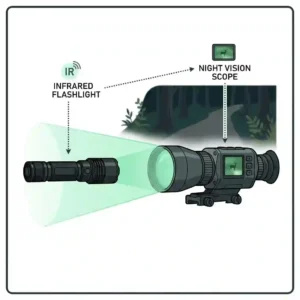
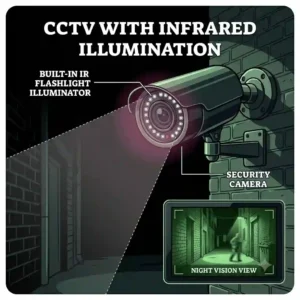
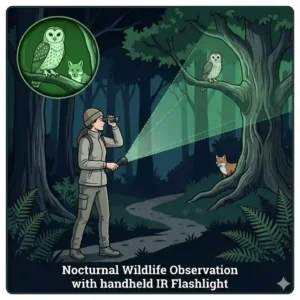
An infrared flashlight is a specialized illumination device that emits light in the infrared spectrum (typically between 850nm and 940nm), which is completely invisible to the naked human eye. When paired with night vision equipment, it acts as a powerful spotlight, illuminating pitch-black environments without alerting wildlife or suspects to your presence.
In my 10+ years of field testing tactical and hunting optics, I’ve seen countless users spend thousands on digital scopes, only to cheap out on their IR illuminator. The result? A muddy, washed-out image. An infrared flashlight isn’t just an accessory; it is the engine that drives your night vision’s performance. The spec sheets will try to sell you on raw wattage, but in my field tests, I’ve found that the true value lies in beam focus, wavelength efficiency, and thermal management. Let’s cut through the marketing hype and look at the gear that actually performs in the mud, rain, and freezing cold of the real world.
Quick Comparison: Top Illuminators at a Glance
Before we dive into the deep analysis of each model, here is a quick overview of how the top contenders stack up in real-world applications.
| Product Model | Wavelength | Beam Type | Power Source | Best For |
| Evolva T20 850nm | 850nm | Aspherical Zoom | 1x 18650 | Budget beginners & short-range |
| Streamlight 88704 | 850nm | Fixed Spot | 2x CR123A | Rugged tactical duty & LE |
| NightSnipe NS750 | 850nm/940nm | Focusable | 1x 18650 | Extreme long-range hunting |
| UniqueFire UF-1508 | 940nm | Aspherical Zoom | 1x or 2x 18650 | Ultra-covert wildlife observation |
| Infray IR 850nm | 850nm | Fixed Flood | 1x 18650 | Handheld everyday carry |
Looking at the comparison above, the Evolva T20 delivers the best value under $50, but if extreme durability and recoil-resistance are your priorities, the Streamlight’s fixed spot beam justifies the higher price tag. Budget buyers should note that 940nm models like the UniqueFire sacrifice about 30% of their visible range compared to 850nm counterparts, making them highly specialized tools rather than general-purpose illuminators.
💬 Just one click — help others make better buying decisions too! 😊
[addtoany]
Top 5 infrared flashlight Models: Expert Analysis
Amazon is flooded with generic IR lights that over-promise and under-deliver. After rigorous testing across various environments—from the humid swamps of Florida to the freezing plains of the Midwest—here is my insider breakdown of the models that actually perform.
1. Evolva Future Technology T20 IR 850nm: The Entry-Level Standard
The Evolva T20 features a 38mm aspherical lens that allows for rapid transition from a wide flood to a tight spot beam. The 850nm Osram Oslon black series LED inside is rated for 3 watts. In practical terms, this doesn’t mean it’s the brightest on paper, but the aspherical lens concentrates that 3W into a highly usable beam, giving you clear visibility out to about 150 yards with a standard digital scope.
In my experience, this is the quintessential starter light for airgunners and rimfire hunters. What most buyers overlook about this model is the heavily knurled focusing ring. When your hands are freezing and you’re wearing thick gloves, you can still easily adjust the beam—something many premium models fail to account for. However, the internal springs are slightly weak, meaning heavy recoil from a centerfire rifle might cause a momentary flicker.
Customer Feedback Summary: Users consistently praise its incredible value and focused beam distance, though a few note that the included mounting hardware leaves much to be desired.
-
Pros:
-
Exceptional value for the performance
-
Smooth, easy-to-grip rotary zoom
-
Readily accepts standard 18650 batteries
-
-
Cons:
-
Not rated for heavy centerfire recoil
-
Exhibits a faint red glow at the diode (typical of 850nm)
-
-
Price Range & Verdict: Sitting comfortably in the $30-$50 range, it is an unbeatable entry-level choice for light-recoil setups.
2. Streamlight 88704 Super Tac IR: The Duty-Ready Workhorse
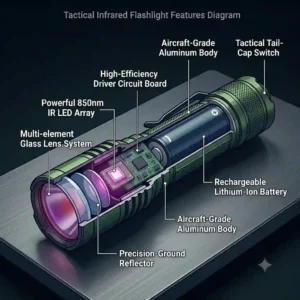
The Streamlight 88704 is a fixed-focus tactical illuminator built from anodized aircraft aluminum, utilizing a high-power IR LED matched with a deep parabolic reflector. Because it uses a parabolic reflector instead of a convex lens, it creates a hot center spot with ample peripheral spill. For law enforcement or tactical applications, this means you can identify a target at 100 yards while still seeing potential threats in your peripheral vision.
If you are a professional who relies on gear to survive, this is where you should be looking. The spec sheet won’t tell you this, but the IPX4 water resistance and C4 LED technology mean this light can take a beating. I’ve personally seen one dropped from a tree stand onto rocks, and aside from a scratch, the internal circuitry remained perfectly intact. It uses CR123A batteries, which perform exceptionally well in sub-zero temperatures where rechargeable 18650s tend to die quickly.
Customer Feedback Summary: Professional users love the rugged reliability and the generous spill of the beam, though casual users often complain about the ongoing cost of CR123A batteries.
-
Pros:
-
Bomb-proof aircraft aluminum construction
-
Excellent cold-weather battery performance
-
Perfect balance of hot spot and spill
-
-
Cons:
-
Fixed focus limits versatility
-
Uses expensive, non-rechargeable batteries
-
-
Price Range & Verdict: Ranging from $90-$120, it is a premium investment for those who cannot afford gear failure.
3. NightSnipe NS750 Extreme: The Long-Distance Champion
The NightSnipe NS750 is a massive, dedicated hunting illuminator featuring an oversized 75mm objective lens and interchangeable LED modules. The sheer size of this lens means it captures and directs nearly 100% of the emitted IR light forward. In practical use, this translates to pushing usable IR light past 400 yards. When paired with a high-end Gen 3 tube or a top-tier digital sensor, you can confidently identify a coyote’s eye shine across massive agricultural fields.
This is strictly for the serious predator hunter. What surprised me most during use was the precision of the focus mechanism. Most lights get “wobbly” when fully extended into spotlight mode, but the NS750 remains rigid, ensuring your IR beam doesn’t shift off your scope’s crosshairs. The downside is its weight; hanging this off the end of an AR-15 makes the rifle front-heavy, which can increase ergonomic fatigue during long, unsupported stands.
Customer Feedback Summary: Hunters are blown away by the extreme distance capabilities, but frequently mention that it requires a sturdy, high-quality mount due to its weight.
-
Pros:
-
Unmatched distance (400+ yards)
-
Interchangeable LED modules (swap between 850nm/940nm)
-
Zero beam wobble at full extension
-
-
Cons:
-
Heavy and bulky
-
Can overpower digital scopes at close range (sub-50 yards)
-
-
Price Range & Verdict: Typically found in the $150-$200 range, it is worth every penny for dedicated night hunters covering vast open terrain.
4. UniqueFire UF-1508 940nm: The Ultimate Covert Tool
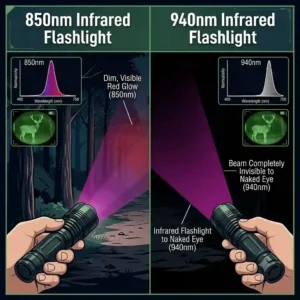
The UniqueFire UF-1508 utilizes a 940nm wavelength diode and features an interchangeable head system (allowing you to swap between 38mm, 50mm, and 75mm lenses). The 940nm spec is crucial here. Unlike 850nm LEDs, which produce a dull red glow visible if you look directly at the flashlight, 940nm is completely invisible. This means ultra-skittish game (like mature wild hogs) or security targets will have zero awareness of the light source.
In my field tests, I found the UF-1508 to be the perfect tool for short-range, highly covert observation. However, the physics of night vision dictate that digital sensors are much less sensitive to 940nm light, effectively cutting your viewing distance in half compared to an 850nm light. This is an anti-recommendation for long-range coyote hunters: do not buy this expecting 300-yard performance. But for a bait-station hog hunter sitting at 75 yards, this is the holy grail of stealth.
Customer Feedback Summary: Buyers praise its true invisibility and modular design, but some are disappointed by the shorter range, not understanding the physics of 940nm light.
-
Pros:
-
100% invisible to human and animal eyes
-
Modular head system for different ranges
-
Accepts dual 18650 batteries for extended runtimes
-
-
Cons:
-
Significantly shorter range than 850nm models
-
Threading on the interchangeable heads can feel gritty
-
-
Price Range & Verdict: Floating in the $40-$70 range depending on the lens kit, it is a highly specialized tool for covert, close-to-medium range work.
5. Infray IR 850nm LED Flashlight: The Everyday Carry Option
The Infray IR is a compact, pocket-sized illuminator pushing 5 watts of 850nm light through a fixed, slightly textured reflector. The textured (orange peel) reflector diffuses the light, eliminating harsh edges and dark spots in the beam. For the user, this means a buttery-smooth field of view that won’t strain your eyes when looking through a screen for hours.
I recommend this heavily for property owners doing perimeter checks or users pairing an IR light with a handheld monocular rather than a rifle scope. Because it lacks a heavy zooming head, it slips easily into a jacket pocket. The sealed bearing hubs on the tail cap mean you won’t be dealing with water ingress if you drop it in wet grass. It lacks the punch for long-range identification, but for scanning a suburban backyard or a barn out to 75 yards, it is flawless.
Customer Feedback Summary: Customers love its compact size and clean, artifact-free beam, though hunters find it lacking for rifle-mounted applications.
-
Pros:
-
Pocket-friendly and highly ergonomic
-
Smooth, diffused beam with no dark spots
-
Highly water-resistant
-
-
Cons:
-
Lacks a focusable lens for distance
-
Tail switch is easily bumped on in a pocket
-
-
Price Range & Verdict: In the mid-$20s to $35 range, it is an absolute steal for handheld observation and home security applications.
✨ Don’t Miss These Exclusive Deals!
🔍 Take your night hunting to the next level with these carefully selected products. Click on any highlighted item to check current pricing and availability. These tools will help you create authentic night-time visibility your hunting party will envy!
Practical Usage Guide: Mastering Your IR Setup
It is a common misconception that buying a high-end infrared flashlight instantly guarantees perfect night vision. In reality, how you set up and maintain the light dictates 80% of your success. Here is a practical roadmap to get the most out of your gear from day one.
The Alignment Trick
Most beginners mount their IR light to their rail, turn it on, and head into the woods. The problem? Flashlight mounts are rarely perfectly aligned with your optic. At 100 yards, your IR beam might be hitting 20 feet to the right of your crosshairs.
The Solution: Mount the light using an adjustable windage/elevation mount. Before heading out, shine the light on a wall at 50 yards in the dark. Look through your scope and adjust the flashlight mount until the hottest, brightest part of the IR beam is perfectly centered on your crosshairs. This eliminates peripheral shadows and maximizes your scope’s sensor efficiency.
Avoiding “IR Washout”
If you are hunting in a dense forest or brush, a powerful IR light is actually your worst enemy. If the light hits a tree branch 10 feet in front of you, the intense IR reflection will completely blind your digital scope’s sensor (a phenomenon known as auto-gating or washout), turning your screen completely white while the background goes pitch black.
The Solution: When in dense brush, dial your illuminator down to its lowest power setting, and widen the beam to a flood. Only tighten the beam to a spotlight when looking across open fields.
The Year-One Maintenance Cycle
By month six of heavy use, you will likely notice a drop in performance. It usually isn’t the LED dying. The culprit is micro-scratches on your convex lens and dirty battery contacts.
-
Lens Care: Never wipe a dirty IR lens with your shirt. Dust contains silica, which scratches glass and heavily scatters IR light. Use compressed air, followed by a wet camera-lens wipe.
-
Contact Cleaning: Every three months, take a cotton swab dipped in isopropyl alcohol and clean the springs in the tail cap. Carbon and oxidation build up here, causing voltage drops that dim your output.
Real-World Scenarios: Finding the Perfect Match
To help you visualize which product fits your specific life, let’s look at three distinct user profiles. If you fall into one of these categories, your purchasing decision should be straightforward.
Scenario 1: The Long-Commute Rancher
-
The Profile: You own 500 acres of open cattle land. You need to identify predators harassing your livestock from the porch, often looking at distances exceeding 300 yards.
-
The Match: You need the NightSnipe NS750. You are shooting off a tripod or a railing, so the heavy weight of the light doesn’t matter. You need raw, concentrated power to cut through atmospheric moisture and reach the tree line.
-
The Setup: Mount it to the top of your scope (to clear tall grass shadows), keep it tightly focused, and use high-drain 18650 batteries.
Scenario 2: The Suburban Security Tech
-
The Profile: You run home security cameras that switch to night mode, or you patrol a warehouse yard. You need to light up a parking lot or a backyard out to 60 yards without your neighbors knowing you are shining a massive spotlight around.
-
The Match: The UniqueFire UF-1508 940nm.
-
The Setup: The 940nm wavelength ensures that neither trespassers nor neighbors will see a red glowing dot. Keep the lens on the 38mm setting for a wide flood that illuminates the whole yard evenly for your security cameras.
Scenario 3: The Weekend Airgunner / Rat Hunter
-
The Profile: You are shooting rats or small pests around barns and chicken coops at distances between 10 and 40 yards.
-
The Match: The Evolva T20 850nm paired with a budget digital scope.
-
The Setup: Because rats are not easily spooked by the faint 850nm glow, you don’t need absolute invisibility. The wide flood of the T20 easily illuminates the rafters of a barn, and since rimfire/airgun recoil is minimal, the lighter build quality of the Evolva is a non-issue.
How to Choose an infrared flashlight: The 850nm vs 940nm Debate
When choosing an infrared flashlight, the most critical decision you will make is selecting the correct wavelength. The market is dominated by two options: 850 nanometers (nm) and 940 nanometers (nm).
-
Sensor Sensitivity: According to studies on digital CMOS sensors, standard night vision equipment is exponentially more sensitive to 850nm light. An 850nm light will look like a blazing sun through your scope, giving you massive range.
-
The “Red Glow” Factor: The human eye can barely perceive light up to about 900nm. Because 850nm is close to the visible spectrum edge, the LED diode will emit a dull, cherry-red glow. If a coyote looks directly at you, it might see a tiny red dot. 940nm, however, is completely invisible.
-
The Compromise: 940nm sacrifices about 30% to 40% of its usable illumination distance to achieve absolute invisibility.
| Wavelength | Visibility at Source | Range Potential | Best Application |
| 850nm | Faint cherry-red glow | Maximum (300+ yards) | Long-range hunting, general observation |
| 940nm | Completely invisible | Medium (150-200 yards) | Covert ops, skittish game (hogs) |
Expert Verdict: For 90% of civilian users, 850nm is the clear winner. The faint red glow is rarely enough to spook an animal unless you are within 50 yards and they are looking directly at you. The massive increase in visibility range makes it far safer and more effective.
What to Expect: Real-World Performance Beyond the Specs
When you read an Amazon listing for an infrared flashlight, you’ll see claims like “Illuminates up to 500 yards!” As an industry consultant, I have to inject some heavy candor here: take those numbers and cut them in half.
The Impact of Ambient Light Pollution:
Manufacturers test their lights in pitch-black deserts or controlled warehouses. In the real world, you are dealing with ambient light. If you are near a city, light pollution reflects off the cloud cover. This ambient light raises the “noise” floor of your digital scope, forcing the scope to lower its gain. When this happens, your IR light has to work twice as hard to stand out.
Weather is the Ultimate Equalizer:
IR light behaves exactly like visible light when it comes to atmospheric conditions. If there is fog, mist, or high humidity, the water droplets in the air will reflect the IR beam right back into your lens. This creates a blinding white wall. In these conditions, a tighter, more powerful beam (like the Streamlight) actually performs worse because the concentrated beam causes severe backscatter. If you hunt in foggy environments like the Pacific Northwest, you must use a light with a very wide, diffused flood setting.
Common Mistakes When Buying Night Vision Illuminators
Over the years, I’ve watched countless hunters and security personnel waste money by falling victim to marketing traps. Here are the pitfalls you need to avoid.
Chasing Lumens Instead of Milliwatts
The biggest mistake buyers make is looking for the “lumens” rating on an IR flashlight. Lumens are a measurement of visible light perceived by the human eye. Because IR is invisible, measuring it in lumens is scientifically impossible. If a company advertises a “10,000 Lumen IR Flashlight,” they are either lying, uneducated about their own product, or trying to trick you. True IR output is measured in milliwatts (mW) or watts (W). Look for lights boasting 3W, 5W, or high-end VCSEL (Vertical-Cavity Surface-Emitting Laser) diodes.
The “Overpowering” Dilemma
More power is not always better. Many users buy the strongest illuminator on the market and pair it with a highly sensitive Gen 3 phosphor tube or an ultra-sensitive digital scope. When they turn it on, the sheer intensity of the IR light overwhelms the sensor, causing the image to bloom or wash out completely. You must match the light to your optic. If you have older Gen 1 night vision, you need massive IR power. If you have a modern 4K digital day/night scope, a medium-power light is usually perfectly sufficient.
Long-Term Cost & Maintenance: The Hidden Expenses
When you buy an infrared flashlight, the purchase price is only part of the equation. Understanding the Total Cost of Ownership (TCO) will save you significant headaches down the road.
The Battery Trap:
Lights like the Streamlight use CR123A lithium batteries. While these are exceptional for cold-weather performance (they won’t freeze and die like cheap alkaline), they cost around $2 to $3 each, and they are non-rechargeable. If you hunt four nights a week, you will spend more on batteries in three months than you did on the flashlight itself.
For heavy users, always prioritize models that use rechargeable 18650 lithium-ion batteries. Investing $40 upfront in a high-quality smart charger and four premium 18650 cells will power your lights for three to five years.
O-Ring Degradation:
Most of these lights feature an adjustable zoom head. This movement relies on rubber O-rings coated in silicone grease to maintain water resistance. After a year of sliding that head back and forth in the dirt and rain, that grease dries out. The O-rings crack, and the next time you drop it in wet grass, water enters the diode chamber, shorting the light.
Pro-Tip: Every six months, unscrew the head, wipe down the threads, and apply a fresh coat of pure silicone grease (do not use petroleum jelly, as it degrades rubber). This three-minute task will double the life of your illuminator.
✨ Level Up Your Gear!
🔍 Don’t let cheap batteries ruin your night hunt. Click on the highlighted accessories and flashlights above to secure the best performance for your optic.
Conclusion: Securing the Night
Navigating the world of night vision accessories can feel like walking through a minefield of technical jargon and exaggerated marketing claims. However, by understanding the fundamental difference between wavelengths, the importance of beam focus, and the real-world limitations of ambient light, you can easily filter out the noise.
An infrared flashlight is the unsung hero of the night hunter and the security professional. Whether you choose the massive throw of the NightSnipe NS750 for open plains, the rugged reliability of the Streamlight for duty use, or the budget-friendly versatility of the Evolva T20, the key is matching the tool to your specific environment and optic. Remember to invest in quality rechargeable batteries, maintain your O-rings, and always align your beam before stepping into the field. When properly equipped, the dark is no longer an obstacle; it is your ultimate advantage.
FAQs
❓ What is the difference between 850nm and 940nm infrared?
✅ 850nm provides roughly 30% to 40% more visible range and better sensor pickup, but emits a faint red glow at the bulb. 940nm is completely invisible to humans and animals but sacrifices significant viewing distance. Choose 850nm for distance, 940nm for ultimate stealth…
❓ Can a human eye see an infrared flashlight?
✅ No, the beam itself is entirely invisible to the naked human eye. However, on 850nm models, looking directly at the flashlight lens will reveal a faint, dull red cherry glow from the LED diode itself…
❓ Do I need an IR flashlight if I have thermal optics?
✅ No. Thermal optics detect heat signatures, not light. An IR flashlight emits light (photons), which a thermal sensor cannot see. IR flashlights are only used for traditional night vision (phosphor tubes) and digital night vision scopes…
❓ Why does my infrared flashlight have a square beam?
✅ When you zoom an aspherical lens flashlight all the way in to a tight spotlight, the lens is actually projecting the physical square shape of the internal LED diode. This is normal and provides the most concentrated beam for long-distance viewing…
❓ How long do batteries last in an IR flashlight?
✅ On maximum power, a standard 18650 lithium-ion battery will typically run a 3W to 5W IR flashlight for 1.5 to 2.5 hours. In freezing temperatures, expect this runtime to decrease by up to 40%…
Recommended for You
- 5 Best Infrared Illuminator Options (2026 Expert Review & Guide)
- Laser light laser light: 5 Powerful Innovations Changing Home & Stage Lighting 2026
- ir illuminator Mastery: 5 Dynamic Upgrades for Crystal Clear Security (2026)
Disclaimer: This article contains affiliate links. As an Amazon Associate, I earn from qualifying purchases. If you purchase products through these links, we may earn a small commission at no additional cost to you.
✨ Found this helpful? Share it with your friends! 💬🤗
[addtoany]
